By Susan Scutti/ CNN Healthcare spending in the United States increased by about $933. 5 billion between 1996 and 2013, according to an analysis published Tuesday in the medical journal JAMA. Majority of this surge was a result of normally higher rates for health care services.
Dieleman, lead author of the study and Assistant Professor of Global Health and Researcher at the Institute for Health Metrics and Assessment at the University of Washington in Seattle, gathered information on 155 separate health conditions and 6 possible treatment categories: inpatient, outpatient (medical facility), emergency services, dental care, prescriptions and nursing centers.
" Intensity of care" refers to service range and complexity. "It's the difference between a reasonably easy X-ray as a compared to more intricate MRIs and other kinds of diagnostic services," Dieleman composed in an email. The analysis led to 4 primary takeaways about why U.S. healthcare expenses rose ...
BY JULIE MACKThe United States has, easily, the most costly health-care system in the world, however that hasn't equated into better outcomes on a range of fronts. In 2013, 17. 1 percent of the U.S. gdp was invested in health care, which was half more than France, the No.
Americans also invest more expense on health care, the Commonwealth report said. That report estimated the average U.S. local invested $1,074 in 2013 on out-of-pocket on health care, for things like copayments for doctor's office check outs and prescription drugs and medical insurance deductibles." Only the Swiss spent more at $1,630, while France and the Netherlands invested less than one-fourth as much ($ 277 and $270, respectively)," the report stated.
ranks reasonably low compared to other industrialized counties on numerous essential health result steps such as life span, the occurrence of chronic conditions and mortality from heart disease, the leading cause of death in the U.S." When you look more deeply at how nations invest in health care, it is very clear that in the U.S.
Some Known Details About Which Of The Following Is A Trend In Modern Health Care Across Industrialized Nations?
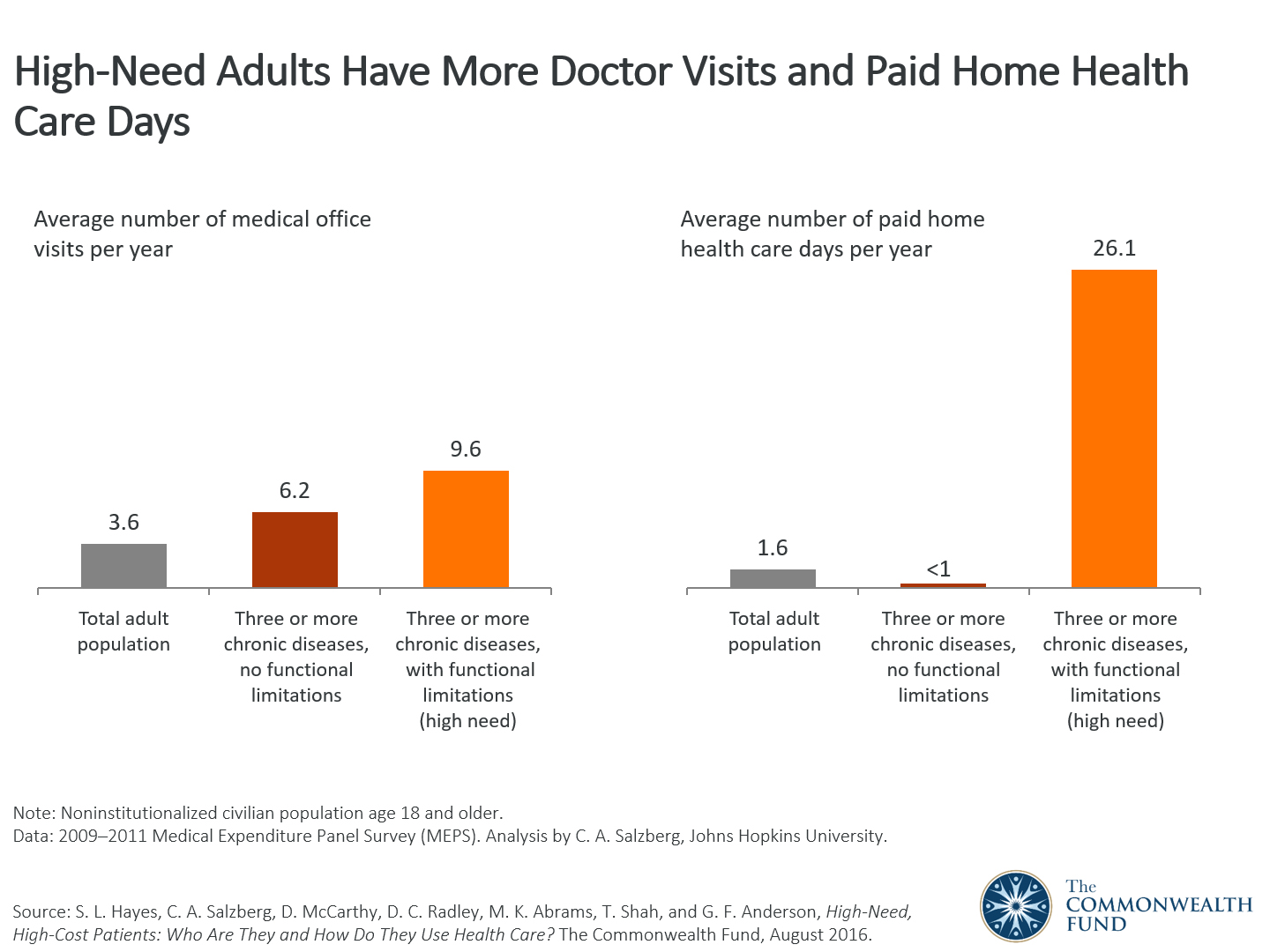
not because Americans go to doctors and hospitals more frequently, but due to the fact that of higher use of medical innovation and health care prices that are greater than in other countries," the Commonwealth report stated. In truth, Americans see a medical professional an average of 4 times per year-- only locals of Switzerland, New Zealand, and Sweden have fewer check outs.
A 2016 report by the International Federation of Health Plans deals ample proof of the high prices paid by Americans compared to other industrialized nations. For example, the typical cost of an MRI in the U.S. was $1,119 in 2015, compared to $811 in New Zealand, the second-highest cost mentioned in the IFHP research study.
Average cost of an appendectomy: $15,930 in the U.S, $8,009 in the UK and $3,814 in Australia. Typical expense of a regular delivery of a baby: $10,808 in the U.S. compared to $7,751 in Switzerland and $5,312 in Australia. Costs for hip replacement balanced $29,067 in the U.S. compared to $19,484 in the U.K.
Prescription drugs likewise cost more in the U.S., the IFHP research study said. Examples: A month's supply of Xarelto, a drug to treat blood clots averaged $292 in the U.S. compared to $126 in the U.K. and $48 in South Africa. A month's supply of Humira, a drug to deal with rheumatoid arthritis balanced $2,669 in the U.S.
and $822 in Switzerland. A month's supply of Avastin, a cancer drug, averaged $3,930 in the U.S. compared to $1,752 in Switzerland and $480 in the U.K.So what's driving costs?Part of an expense from a May 2017 surgical treatment at University of Michigan healthcare facility. A lot of U.S. costs are based on services provided-- and the more services, the bigger the expense.
taking a more conservative method (what is a single payer health care)." In effect, fee-for-service is open-ended: It resembles going to an automobile mechanic and concurring to Addiction Treatment Center spend for whatever services he considers required, at whatever rate he selects, with no penalties to the provider if the service is poor," wrote Charles Hugh Smith in a post for dailyfinance.
Some Known Facts About What Is The Primary Mechanism That Enables People To Obtain Health Care Services?.
Americans not only pay https://writeablog.net/nelsea34jv/expense-permitting-state-leaders-to-efficiently-leave-out-black-people more for innovation such as MRIs, however they use more of it. The U.S. is the top consumer of advanced diagnostic imaging technology, according to the 2015 Commonwealth analysis." Americans had the greatest per capita rates of MRI, calculated tomography (CT), and positron emission tomography (PET) examinations among the countries where data were available," the study stated.
and Japan were amongst the countries with the greatest number of these imaging machines." Americans are leading customers of prescription drugs, according to the Commonwealth study, and they pay top dollar for those drugs. The "essential element" driving high drug expenses in the U.S. are government-protected "monopoly" rights for drug makers, according to a 2016 Harvard study.
Drug producers have a monopoly on brand-new drugs. Under our patent system, drug business can be the sole producer of a brand-new drug, avoiding cheaper generics from coming to market. One issue is that business can a little tweak a drug to maintain the patent for longer. The FDA takes three to 4 years to authorize a brand-new drug.
Research and development expenses do not justify the high U.S. drug costs. About 10% to 20% of pharmaceutical business earnings is invest on R&D, the research study stated." Arguments in defense of maintaining high drug rates to protect the strength of the drug industry misstate its vulnerability," the Harvard research study stated. "The biotechnology and pharmaceutical sectors have for years been amongst the extremely best-performing sectors in the U.S.
medical facility spending, more than two times the percentage in Canada and the highest amongst 8 nations studied, according to a 2015 Commonwealth Fund analysis.The research study compared the U.S. to Canada, England, Scotland, Wales, France, Germany, and the Netherlands, using information gotten for 2010 or 2011. A huge factor for the greater administrative costs: In nationalized health systems, the billing departments are much, much smaller compared to the U.S., where health-care service providers should work out payment rates individually with each payer and handle a variety of requirements and billing procedures.
However in the United States, healthcare is very much a rewarding industry that leads to higher wages from medical professionals to health center administrators to health insurance executives. U.S. physicians are amongst the best-paid on the planet. However "the most significant bucks are presently earned not through the delivery of care, however from supervising the company of medicine," said a 2014 New york city Times story." The base pay of insurance coverage executives, medical facility executives and even medical facility administrators often far outstrips medical professionals' incomes, according to an analysis performed for The New york city Times by Compdata Surveys: $584,000 on average for an insurance ceo, $386,000 for a health center C.E.O.
The Best Strategy To Use For What Home Health Care Is Covered By Medicare
In Michigan, settlement for Daniel Loepp, CEO of Blue Cross Blue Shield of Michigan, was $10. 9 million in 2016. Richard Breon, Visit this website CEO of Spectrum Health in Grand Rapids, had an income of $2. 9 million in 2014, and Spectrum's income tax return lists 15 other administrators whose payment averaged $1.